

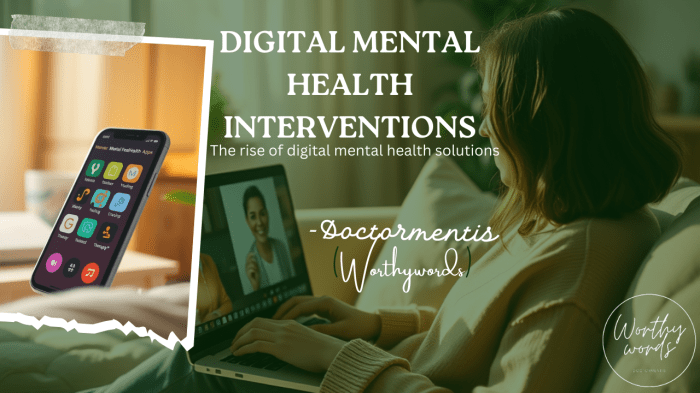
Digital mental health interventions have emerged as a crucial tool for addressing the growing global mental health crisis. With increasing demands on mental health services and the rise of mental health issues exacerbated by the COVID-19 pandemic, digital solutions have become essential in providing accessible, effective, and scalable mental health care. From apps and teletherapy to online support groups and AI-driven therapy, digital interventions are revolutionizing the way we approach mental well-being.
What Are Digital Mental Health Interventions?
Digital mental health interventions encompass a wide range of technologies designed to improve mental health outcomes. These interventions use digital platforms like mobile apps, websites, virtual reality (VR), artificial intelligence (AI), and teletherapy to deliver mental health support. Some of the most common forms of digital interventions include:
• Mental Health Apps: Mobile apps that offer resources such as guided meditation, mood tracking, and cognitive behavioral therapy (CBT).
• Teletherapy: Therapy sessions conducted via video calls or phone, allowing patients to receive professional support from the comfort of their homes.
• Online Support Communities: Platforms where individuals can connect with peers and share their mental health experiences, offering support in a virtual environment.
• AI-driven Chatbots: Automated tools that provide therapeutic conversations, answer questions, and guide users through mental health exercises.
The growing popularity of digital mental health tools stems from the numerous benefits they provide:
1. Increased Accessibility
Digital interventions eliminate geographical barriers, making mental health care accessible to individuals in remote areas or those who may not have access to traditional therapy. With just a smartphone or internet connection, users can access mental health support 24/7, which is particularly beneficial for those who may be hesitant or unable to seek in-person care.
2. Affordability
Many digital mental health tools, especially mobile apps, are either free or available at a low cost. This provides a cost-effective alternative to traditional therapy, making mental health support more affordable for individuals who might otherwise not seek treatment due to financial constraints.
3. Convenience and Flexibility
Digital mental health interventions offer users the flexibility to engage in mental health activities at their own pace and convenience. Whether it’s a meditation session or journaling through an app, users can integrate these activities into their daily routines without the need for appointments or travel.
4. Personalized Care
Many digital tools use algorithms and data-driven approaches to tailor mental health support to the individual’s needs. AI-driven chatbots, for instance, can assess a user’s mood and offer personalized suggestions for coping strategies, while some apps adjust exercises based on user progress.
5. Destigmatization of Mental Health Care
Digital platforms offer a level of anonymity and privacy that can help individuals feel more comfortable seeking mental health support. This is particularly important for those who might feel stigmatized or ashamed to ask for help through traditional channels.
Popular Digital Mental Health Tools
Several digital platforms and apps have gained widespread recognition for their role in supporting mental health. Here are some of the most popular tools:
• Calm: A leading mindfulness and meditation app that helps users manage stress, anxiety, and sleep problems.
• Headspace: Another top mindfulness app offering guided meditations and mindfulness practices for mental well-being.
• BetterHelp: An online counseling platform that connects individuals with licensed therapists via video, chat, or phone.
• Wysa: An AI-driven mental health chatbot that provides conversational support and emotional health exercises.
• 7 Cups: A free platform offering online chat support with trained listeners and licensed therapists.
Research on the Effectiveness of Digital Mental Health Interventions:
• A 2020 meta-analysis published in the Journal of Medical Internet Research found that digital cognitive behavioral therapy (CBT) was effective in reducing symptoms of depression and anxiety, particularly when combined with human support.
• Research by Lancet Digital Health (2021) highlighted the potential of AI-driven chatbots in delivering mental health interventions, showing that chatbots can significantly improve mood and reduce symptoms of anxiety when used regularly.
• A study published by the National Institutes of Health (NIH) found that mobile apps designed for mental health, especially those based on CBT and mindfulness, were effective in reducing mild to moderate symptoms of depression and anxiety.
Challenges of Digital Mental Health Interventions
1. Digital Divide
Not everyone has equal access to digital tools. Individuals in low-income communities or those without reliable internet connections may find it difficult to access online mental health services. This digital divide could exacerbate existing health disparities.
2. Quality and Regulation
The rise of mental health apps has led to concerns about the quality and safety of these tools. While some apps are backed by evidence-based practices, others may lack proper oversight and regulation. Ensuring that digital tools adhere to clinical standards and are evaluated for effectiveness is crucial.
3. Privacy and Data Security
Digital tools collect sensitive personal data, raising concerns about privacy and confidentiality. Ensuring that platforms adhere to strict data security protocols and comply with privacy laws is essential to maintaining user trust.
4. Human Connection
While digital tools provide convenience, they cannot fully replace the human connection that traditional therapy offers. For some individuals, the lack of in-person interaction may limit the effectiveness of these tools in addressing complex mental health issues.
What does the Future of Digital Mental Health looks like?
As technology continues to advance, digital mental health interventions will likely play an even greater role in mental health care. Innovations in AI, virtual reality (VR), and machine learning may lead to even more personalized and effective mental health support. However, to fully realize the potential of these tools, it is essential to ensure equitable access, rigorous evaluation, and integration with traditional care models.
Digital mental health interventions have opened up new avenues for improving mental well-being, offering accessible, affordable, and personalized solutions. While challenges remain, the potential benefits of these tools are undeniable. As research continues to validate their effectiveness and technological advancements drive innovation, digital mental health interventions will likely become a cornerstone of global mental health care.
References
1. Andersson, G., Cuijpers, P., Carlbring, P., Riper, H., & Hedman, E. (2014). Guided Internet-based vs. face-to-face cognitive behavior therapy for psychiatric and somatic disorders: A systematic review and meta-analysis. World Psychiatry, 13(3), 288-295.
https://doi.org/10.1002/wps.20151
2. Davies, E. B., Morriss, R., & Glazebrook, C. (2014). Computer-delivered interventions for anxiety and depressive disorders in children and adolescents: A systematic review and meta-analysis. Behaviour Research and Therapy, 63, 66-82.
https://doi.org/10.1016/j.brat.2014.09.005
3. Hollis, C., Falconer, C. J., Martin, J. L., Whittington, C., Stockton, S., Glazebrook, C., & Davies, E. B. (2017). Annual research review: Digital health interventions for children and young people with mental health problems – A systematic and meta-review. Journal of Child Psychology and Psychiatry, 58(4), 474-503.
https://doi.org/10.1111/jcpp.12663
4. Grist, R., Porter, J., & Stallard, P. (2017). Mental health mobile apps for preadolescents and adolescents: A systematic review. Journal of Medical Internet Research, 19(5), e176.
https://doi.org/10.2196/jmir.7332
Additional Reads
• Digital Mental Health: Opportunities and Challenges in the COVID-19 Pandemic by the World Health Organization (WHO).
• Cognitive Behavioral Therapy in a Digital World: How Online Tools Can Help You by Dr. Simon Rego.
• Mental Health Technologies: A Guide to Understanding the Future of Digital Psychiatry by Dr. John Torous.
Discover more from Doctor Mentis
Subscribe to get the latest posts sent to your email.

 Doctor Mentis
0 comments on “Digital Mental Health Interventions: A New Frontier for Mental Wellness”