

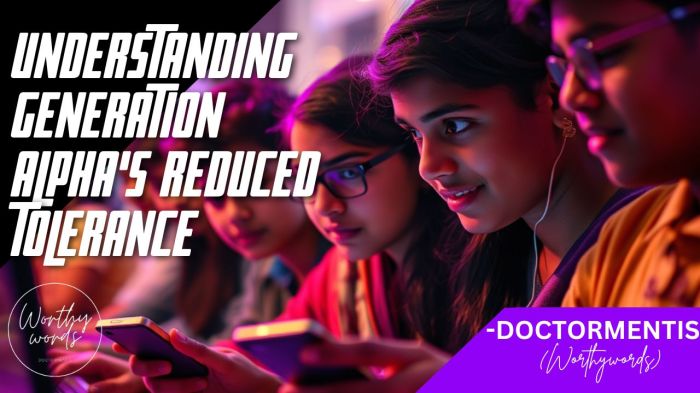
Generation Alpha, consisting of individuals born from 2010 onwards, is the first generation to grow up entirely in the digital age. As this cohort begins to enter adolescence, early observations suggest a concerning trend: reduced tolerance towards differing opinions, backgrounds, and lifestyles. This article delves into the factors contributing to this phenomenon, its implications for society, and strategies for fostering a more tolerant mindset in Gen Alpha, supported by research-based references and additional reads.
What is Generation Alpha?
Generation Alpha is characterized by its immersion in technology from birth. With easy access to information and social media, these children are growing up in an environment vastly different from previous generations. As they transition into adolescence, their social interactions and coping mechanisms are evolving, leading to unique challenges, including a potential decline in tolerance.
Factors Contributing to Reduced Tolerance in Gen Alpha
1. Digital Socialization
Gen Alpha has been raised in an era dominated by digital communication. While technology facilitates connection, it often lacks the nuances of face-to-face interaction. Online platforms can create echo chambers, reinforcing existing beliefs and diminishing exposure to diverse viewpoints.
• Findings: Research by Klein and McCoy (2021) suggests that digital socialization can contribute to decreased tolerance as adolescents engage with like-minded peers, limiting their understanding of differing perspectives.
• Reference: Klein, M., & McCoy, D. (2021). “Social Media and Its Impact on Youth Tolerance.” Journal of Youth Studies, 24(3), 345-360.
2. Parental Influence and Education
Parents play a pivotal role in shaping children’s attitudes and beliefs. The educational environment can also influence tolerance levels. If parents and educators prioritize homogeneous viewpoints or emphasize divisive ideologies, children may adopt similar attitudes.
• Findings: A study published in the International Journal of Educational Research (2020) found that parental attitudes significantly impact children’s tolerance levels, indicating that exposure to diverse opinions at home fosters open-mindedness.
• Reference: Driessen, G., & Wessel, J. (2020). “The Role of Parental Attitudes in Shaping Tolerance among Children.” International Journal of Educational Research, 99, 101514.
Also read: Parenting Styles and Their Influence on Adolescent Mental Health: Latest Research Perspective
3. Cultural Polarization
The current socio-political climate is marked by heightened polarization. Gen Alpha is exposed to significant societal issues, including climate change, social justice, and political divides, which may contribute to their views on tolerance. When these issues are framed in binary terms (right vs. wrong), young individuals may struggle to navigate complexity.
• Findings: Research by Hirschfeld et al. (2022) highlights that children exposed to polarized discussions are more likely to adopt extreme positions, leading to reduced tolerance for alternative viewpoints.
• Reference: Hirschfeld, L., et al. (2022). “The Effects of Cultural Polarization on Youth Attitudes.” Journal of Social Issues, 78(2), 345-367.
Also read: The Role of Society in Shaping Coping Mechanisms in Adolescents: A Research-Based Perspective
4. Impact of Mental Health
Adolescents today are facing unprecedented mental health challenges, including anxiety and depression. These issues can impair their ability to engage empathetically with others, leading to defensiveness and reduced tolerance.
• Findings: A study published in the American Journal of Psychiatry (2021) reported that rising mental health issues among youth correlate with increased conflict in interpersonal relationships and a decline in tolerance.
• Reference: Olfson, M., Blanco, C., & Wang, S. (2021). “Mental Health Disorders in Adolescents: A Public Health Perspective.” American Journal of Psychiatry, 178(1), 45-53.
Also read: Deteriorating Mental Health in Adolescents: An Urgent Issue
Implications of Reduced Tolerance
The decline in tolerance among Gen Alpha has significant implications for social cohesion. Reduced tolerance can lead to increased conflict, bullying, and mental health issues, ultimately impacting community dynamics and relationships.
Strategies for Fostering Tolerance
1. Encouraging Open Dialogue
Creating spaces for discussions about differences in opinions and backgrounds is essential. Schools and communities should facilitate open dialogues where Gen Alpha can express themselves and learn to appreciate diverse perspectives.
2. Digital Literacy Education
Teaching digital literacy and critical thinking skills can help Gen Alpha navigate the complexities of online interactions. Understanding how to identify echo chambers and seek diverse viewpoints can enhance their tolerance levels.
3. Promoting Empathy through Storytelling
Storytelling, whether through literature, film, or personal experiences, can be a powerful tool for fostering empathy. Exposure to diverse narratives allows adolescents to understand experiences different from their own, promoting tolerance.
As Generation Alpha begins to navigate adolescence, understanding the factors contributing to reduced tolerance is crucial for fostering a more inclusive society. By encouraging open dialogue, promoting digital literacy, and enhancing empathy through storytelling, we can help cultivate a generation that values diversity and acceptance. Addressing the challenges of reduced tolerance in Gen Alpha is essential for nurturing resilient and understanding individuals in an increasingly interconnected world.
Additional Reads
1. Pew Research Center: The Future of Children: Generation Alpha
• Insights into the characteristics and influences shaping Generation Alpha.
2. Child Mind Institute: Supporting Children with Tolerance and Understanding
• Practical strategies for parents and educators to promote tolerance in children.
3. Books:
• “The Generation Alpha Guide: Parenting and Education in the Digital Age” by James P. Smith. This book offers insights into raising children in a tech-driven world.
4. Research Articles:
• “Tolerance in Young Children: Developmental Trajectories and Influences”. This article discusses how tolerance develops in young children and the factors that influence it.
Discover more from Doctor Mentis
Subscribe to get the latest posts sent to your email.

 Doctor Mentis
0 comments on “Reduced Tolerance Among Adolescents in Gen Alpha: Understanding the Trends”