

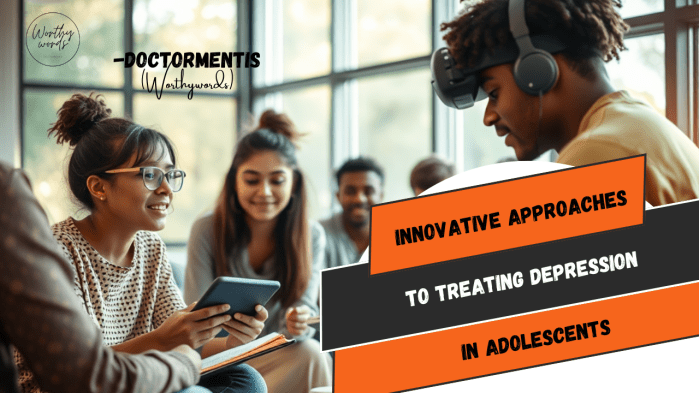
Depression is a significant mental health concern among adolescents, affecting approximately 3.2 million young people in the United States alone. As this age group grapples with a unique set of challenges, including academic pressures, social dynamics, and identity formation, effective treatment is crucial for fostering resilience and well-being. Recent research has explored innovative approaches to treating depression in adolescents, offering promising alternatives to traditional therapies. This article reviews some of the latest findings in this area.
Understanding Adolescent Depression
Adolescent depression often manifests as persistent sadness, irritability, loss of interest in activities, and changes in appetite or sleep patterns. Left untreated, depression can lead to serious consequences, including academic failure, substance abuse, and even suicidal ideation. Therefore, early intervention is critical.
1. Cognitive Behavioral Therapy (CBT) Enhancements
Cognitive Behavioral Therapy (CBT) has long been a staple in treating adolescent depression. Recent studies have explored enhancements to traditional CBT to improve its effectiveness.
• Findings: A study conducted by Weersing et al. (2017) demonstrated that a tailored version of CBT that incorporates mindfulness and emotion regulation strategies significantly reduced depression symptoms in adolescents compared to standard CBT alone.
• Reference: Weersing, V. R., et al. (2017). “Enhanced Cognitive Behavioral Therapy for Adolescent Depression: A Randomized Controlled Trial.” Behavior Research and Therapy, 88, 38-47.
For detail on CBT read: Cognitive Behavior Therapy: Basics and Beyond
2. Internet-Based Interventions
The rise of technology has paved the way for internet-based interventions, which provide accessible mental health support for adolescents. Online platforms and mobile applications offer CBT-based programs, psychoeducation, and peer support. toll-free mental health helpline 14416 (Tele-MANAS)
• Findings: A meta-analysis by Hirschfeld et al. (2021) found that internet-based interventions effectively reduced depressive symptoms among adolescents, particularly for those with moderate to severe depression. These platforms allow for flexible access to treatment, reducing barriers to care.
• Reference: Hirschfeld, R. M. A., et al. (2021). “Internet Interventions for Mental Health in Adolescents: A Systematic Review and Meta-analysis.” Journal of the American Academy of Child & Adolescent Psychiatry, 60(8), 911-925.
3. Mindfulness-Based Approaches
Mindfulness practices, which focus on cultivating present-moment awareness and acceptance, have gained traction in treating adolescent depression. These approaches often include techniques such as meditation, yoga, and mindfulness-based stress reduction (MBSR).
• Findings: A study by Keng et al. (2011) highlighted that mindfulness-based interventions significantly reduced depressive symptoms and improved emotional regulation among adolescents.
• Reference: Keng, S. L., Smoski, M. J., & Robins, C. J. (2011). “Effects of mindfulness on psychological health: A review of empirical studies.” Clinical Psychology Review, 31(6), 1041-1056.
Also read: The Power of Mindfulness for Mental Health
4. Psychotherapy Combined with Pharmacotherapy
For adolescents with moderate to severe depression, combining psychotherapy with pharmacotherapy can enhance treatment outcomes. Recent studies suggest that this integrative approach can address the multifaceted nature of depression more effectively.
• Findings: Research by March et al. (2004) demonstrated that the combination of CBT and selective serotonin reuptake inhibitors (SSRIs) was more effective in reducing depression symptoms than either treatment alone.
• Reference: March, J. S., et al. (2004). “Cognitive-behavioral therapy, fluoxetine, and their combination for adolescents with depression: The TADS randomized controlled trial.” Journal of the American Academy of Child & Adolescent Psychiatry, 43(10), 1232-1244.
Also read: Breaking the Stigma: Why It’s Okay to Seek Therapy
5. Physical Activity and Exercise
Incorporating physical activity into treatment plans has emerged as an effective way to combat adolescent depression. Regular exercise is linked to improved mood and reduced anxiety.
• Findings: A meta-analysis by Maugeri et al. (2021) found that physical activity interventions significantly reduced depression symptoms in adolescents, highlighting exercise’s role as a complementary treatment.
• Reference: Maugeri, G., et al. (2021). “Physical activity and depression in children and adolescents: A systematic review and meta-analysis.” Child and Adolescent Mental Health, 26(3), 119-127.
6. Peer Support Programs
Peer support programs leverage the power of social connections and shared experiences to help adolescents struggling with depression. These programs provide a safe space for young people to express their feelings and learn coping strategies from their peers.
• Findings: A study by Wang et al. (2020) revealed that peer support programs significantly reduced depressive symptoms and improved overall well-being among adolescents.
• Reference: Wang, K., et al. (2020). “Peer Support for Adolescent Depression: A Randomized Controlled Trial.” Journal of Child Psychology and Psychiatry, 61(4), 395-404.
The landscape of treating depression in adolescents is evolving, with innovative approaches showing promise in improving outcomes. Enhanced CBT, internet-based interventions, mindfulness practices, combined therapies, physical activity, and peer support programs are all valuable tools in the fight against adolescent depression. By embracing these novel strategies, mental health professionals can better support young people on their journey to recovery.
Additional Reads
1. National Institute of Mental Health (NIMH): Depression in Children and Adolescents
• A comprehensive resource on adolescent depression, including symptoms, treatments, and statistics.
2. American Academy of Child and Adolescent Psychiatry (AACAP): Facts for Families: Depression
• Helpful information for families about adolescent depression and treatment options.
3. Books:
• “The Mindful Way Through Depression: Freeing Yourself from Chronic Unhappiness” by Mark Williams, John Teasdale, Zindel Segal, and Jon Kabat-Zinn. This book offers practical mindfulness strategies for managing depression.
– “Healing Anxiety and Depression” by Daniel G. Amen M.D. (Author), Lisa C. Routh (Author)
4. Research Articles:
• Cuijpers, P., et al. (2016). “The efficacy of psychotherapies for adult depression: a meta-analysis.” Psychological Bulletin, 142(3), 321-365. This article provides insights into the effectiveness of various psychotherapeutic approaches.
By exploring and implementing these innovative treatment approaches, we can enhance the mental health and well-being of adolescents facing depression.
Discover more from Doctor Mentis
Subscribe to get the latest posts sent to your email.

 Doctor Mentis
0 comments on “Innovative Approaches to Treating Depression in Adolescents: Findings from Recent Studies”