

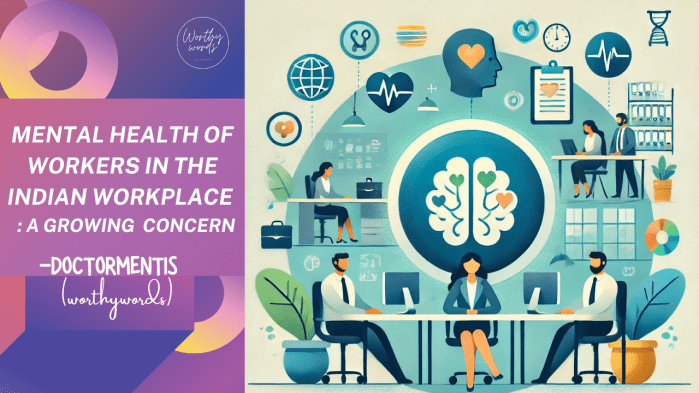
Today,on 10 October 2024 we are celebrating World Mental Health Day with the theme ‘It is Time to Prioritise Mental Health in the Workplace’ chosen by a global vote open to the public
In recent years, mental health has emerged as a significant concern in workplaces across the globe, including in India. As the country experiences rapid economic growth and industrialization, the workforce faces increasing pressure to meet the demands of a competitive environment. This pressure, coupled with social stigma around mental health issues, creates a challenging scenario for Indian workers. Addressing the mental health of employees is not just a moral imperative but also a business necessity, as it directly impacts productivity, job satisfaction, and overall organizational well-being.
The State of Mental Health in Indian Workplaces
According to a study by the World Health Organization (WHO), India accounts for nearly 15% of the global mental, neurological, and substance abuse disorder burden. In the workplace, stress and anxiety are among the most reported issues, driven by factors such as high workloads, job insecurity, long working hours, and a lack of work-life balance.
A 2016 survey by the Indian Council of Medical Research (ICMR) found that nearly 15% of Indian employees suffer from some form of mental health issue. Yet, only a fraction of these individuals receive adequate care due to the stigma surrounding mental health and the lack of awareness or resources in many organizations.
Factors Contributing to Workplace Mental Health Issues
1. High Workload and Long Hours: Many industries, especially in sectors like IT, finance, and manufacturing, demand extended working hours and tight deadlines, leading to burnout and chronic stress among employees.
2. Job Insecurity: The fear of job loss, especially in volatile industries, contributes significantly to anxiety and stress. The uncertainty brought by the COVID-19 pandemic further exacerbated these concerns.
3. Workplace Culture: A lack of supportive workplace culture, where mental health is not openly discussed or supported, can leave employees feeling isolated and reluctant to seek help.
4. Lack of Mental Health Resources: Many Indian companies still do not have adequate mental health policies or resources like employee assistance programs (EAPs), counseling services, or mental health awareness training.
Impact on Productivity and Business
Poor mental health has a direct impact on productivity. Studies have shown that depression and anxiety lead to an estimated loss of one trillion dollars globally in lost productivity each year. In India, absenteeism, presenteeism (being physically present but mentally unwell), and high turnover rates due to mental health issues contribute significantly to economic losses for businesses.
Steps Towards a Mentally Healthy Workplace
1. Creating Awareness: Organizations need to foster a culture where mental health is openly discussed. Awareness programs and workshops can educate employees about the importance of mental well-being.
2. Implementing Support Systems: Establishing EAPs, offering counseling services, and providing access to mental health professionals can make a significant difference.
3. Training Managers: Managers should be trained to recognize signs of mental health issues and to approach affected employees with empathy and support.
4. Encouraging Work-Life Balance: Flexible working hours, remote work options, and promoting a healthy work-life balance can help reduce stress and burnout.
5. Policy Implementation: Companies should implement mental health policies that protect employees’ mental well-being, including anti-discrimination policies, stress management workshops, and mental health days.
As India continues to grow and modernize, the mental health of its workforce must become a priority for businesses and policymakers alike. By creating supportive work environments, providing necessary resources, and breaking down the stigma associated with mental health, we can ensure a healthier, more productive workforce. Addressing mental health in the workplace is not just about improving the quality of life for employees but also about building stronger, more resilient organizations that can thrive in the long run.
In INDIA for mental health support and assistance – TELEMANAS tollfree helpline number – 14416
References
1. World Health Organization (WHO) – Mental Health
2. Indian Council of Medical Research (ICMR) – Mental Health Study
3. Harvard Business Review – Mental Health in India’s Workplaces
Discover more from Doctor Mentis
Subscribe to get the latest posts sent to your email.


0 comments on “Prioritizing Mental Health at Work: Challenges and Solutions”