

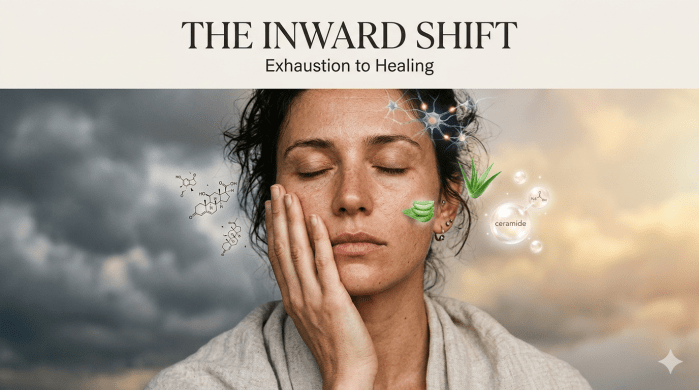
Have you ever noticed a fresh breakout during a stressful week, or skin that looks dull and tired when you’re emotionally drained? That’s no coincidence. The brain and the skin are in constant conversation, and the field of psychodermatology has spent the last few years mapping exactly how that conversation works. If you’ve read our earlier piece on Psychodermatology: Your Skin Is Listening to Your Mind, think of this as a closer look at the mechanisms behind that link, and what you can actually do about it.
What Is the Mind-Skin Connection?
The mind-skin connection describes how our psychological state—stress, anxiety, trauma, or depression—shows up directly on our skin. Emotional strain doesn’t stay in the head; it travels through the body’s stress-signalling systems and can trigger flare-ups, inflammation, and even autoimmune skin disorders.
This isn’t just a metaphor. The outer layer of skin and the central nervous system develop from the same embryonic tissue, the ectoderm, and the skin runs its own local neuroendocrine and immune systems. When you’re under psychological stress, the hypothalamic–pituitary–adrenal (HPA) axis switches on, releasing cortisol and catecholamines, while pro-inflammatory signals are released in the skin itself. Together, these can weaken the skin barrier and activate mast cells—part of why stress so reliably shows up as itch, redness, or a flare, according to Harvard Health Publishing.
How Mental Health Affects the Skin
1. Stress Triggers Inflammation
When you’re stressed, your body activates the HPA axis and releases cortisol and catecholamines, which can increase oil production and pro-inflammatory signalling in the skin—contributing to acne, rosacea, or eczema flare-ups. Over time, chronic stress can also wear down the skin barrier, leaving it less able to hold in moisture and keep out irritants, which is one reason stressful stretches so often coincide with skin that feels reactive or dry.
We went deeper into this specific cycle in When Stress Shows Up on Your Skin: Breaking the Cycle of Inflammation and Anxiety, including practical ways to interrupt it.
Recent research adds a concrete mechanism to this picture. A 2026 study published in Science identified a specific set of stress-responsive nerve cells in the skin that recruit eosinophils (a type of immune cell) to worsen inflammation in mouse models of atopic dermatitis. It’s early-stage, animal-model work rather than a finding in humans, but it’s the clearest biological wiring diagram yet for how psychological stress reaches the skin—see the Science perspective piece for details.
2. Anxiety and Compulsive Behaviors
Anxiety may lead to habits like:
- Skin picking (excoriation disorder)
- Hair pulling (trichotillomania)
- Excessive touching or scrubbing
These behaviors often worsen underlying skin issues and create cycles of guilt or embarrassment. They are recognized primary psychiatric conditions with visible skin symptoms, and habit-reversal training together with cognitive behavioral therapy (CBT) is often the most effective way to interrupt them, per the American Psychiatric Association. We’d also argue that’s reason enough to treat therapy as a first step rather than a last resort—something we unpack in Breaking the Stigma: Why It’s Okay to Seek Therapy.
3. Depression Can Alter Skin Function
Depression can lead to neglect of basic skincare routines, poor nutrition, or dehydration—all of which take a toll on skin appearance and resilience.
Common effects include:
- Dryness and dull complexion
- Increased skin sensitivity
- Accelerated signs of aging
The relationship runs both ways: depression can worsen skin health through behavior and physiology, and living with a visible skin condition can itself raise the risk of depression, according to the APA. That two-way relationship between mood and inflammation is something we explored in more depth in The Link Between Inflammation and Depression.
Common Skin Disorders Linked to Mental Health
Skin disorders that are often worsened by stress, or that show up alongside higher rates of psychological distress, include:
- Acne: Often worsens with stress and anxiety.
- Eczema: Highly sensitive to emotional triggers.
- Psoriasis: Can flare during depressive episodes.
- Hives/Urticaria: Frequently linked with anxiety and panic.
Psychodermatology research describes these as stress-sensitive, or psychophysiological, conditions—skin disease where psychological stress is a genuine trigger for inflammation, not just an unrelated coincidence. For a broader map of this overlap, see Psychodermatology: Your Skin Is Listening to Your Mind.
How to Manage the Mind-Skin Cycle
1. Practice Stress-Reducing Techniques
Incorporate daily habits such as:
- Meditation or deep breathing
- Exercise (especially outdoors)
- Gentle yoga or stretching
- Journaling
Structured approaches such as CBT, mindfulness-based interventions, and habit-reversal therapy have shown real benefit as add-on treatments for conditions including psoriasis, atopic dermatitis, and skin-picking (excoriation) disorder, per this review of mind-body therapies. We look at why ritual and routine matter for this in The Psychology of Skincare: Why Rituals Matter for Mental Health.
2. Establish a Skincare Routine
Consistency provides a sense of control and encourages mindfulness. Choose soothing products with ingredients like:
- Niacinamide (anti-inflammatory)
- Ceramides (skin barrier repair)
- Aloe Vera (calming)
We’ve unpacked what a routine is actually doing for you, beyond the ingredient list, in Your Skincare Routine Is Doing More Than You Think, and how consistent skincare supports confidence in Skincare and Self-Esteem: How Clear Skin Supports Emotional Resilience.
3. Seek Psychodermatology Support
A psychodermatologist specializes in the overlap between psychological health and skin conditions. They can help break the emotional-dermatological cycle. Where a dedicated psychodermatologist isn’t available, coordinated care between a dermatologist and a mental health professional can offer much of the same integrated support, per the APA.
Skin doesn’t just reflect what’s on the surface—it mirrors what’s happening underneath. Treating a flare-up in isolation, without asking what else is going on in someone’s life, misses half the picture. Care for the mind, and the skin quite often follows; just as often, caring for the skin—through routine, ritual, and the right support—is itself a way of caring for the mind.
References
- Nathan, N. (2021). Stress may be getting to your skin, but it’s not a one-way street. Harvard Health Publishing.
- American Psychiatric Association (2025). Psychodermatology: Addressing the Skin–Mental Health Connections. Psychiatric News / APA Blogs.
- Stress and Skin: An Overview of Mind Body Therapies as a Treatment Strategy. PMC (2021).
- Basso, L. (2026). A neuroimmune circuit links stress to skin inflammation. Science.
Further Reading
- When Stress Shows Up on Your Skin: Breaking the Cycle of Inflammation and Anxiety
- Psychodermatology: Your Skin Is Listening to Your Mind
- The Psychology of Skincare: Why Rituals Matter for Mental Health
- Your Skincare Routine Is Doing More Than You Think—Just Not in the Way You’ve Been Told
- Skincare and Self-Esteem: How Clear Skin Supports Emotional Resilience
- The Link Between Inflammation and Depression
- Breaking the Stigma: Why It’s Okay to Seek Therapy
Discover more from Doctor Mentis
Subscribe to get the latest posts sent to your email.


0 comments on “The Mind-Skin Connection: Why Your Mental Health Affects Your Skin”