

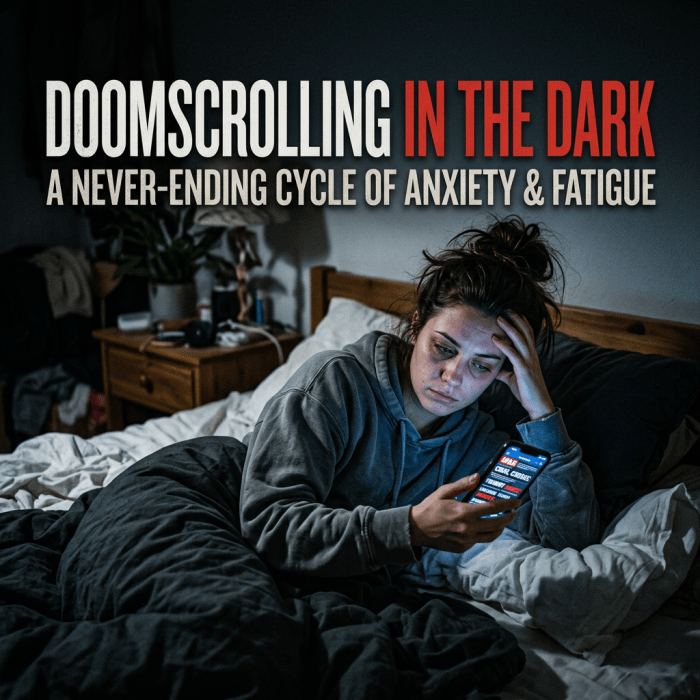
In our digitally connected world, the habit of endlessly scrolling through negative news—known as “doomscrolling”—has become increasingly common. Staying informed is important, but excessive exposure to distressing content can take a real toll on mental health, particularly by feeding into symptoms of depression and anxiety.
What Is Doomscrolling?
Doomscrolling refers to the compulsive consumption of negative news online, often leading individuals to spend extended periods immersed in distressing content. This behavior gained prominence during the COVID-19 pandemic, as people sought constant updates on the crisis. However, the pattern has persisted, with many finding themselves trapped in a cycle of consuming bleak news, which can reinforce feelings of hopelessness and anxiety.
The Psychological Impact of Doomscrolling
A 2024 cross-cultural study of roughly 800 university students in Iran and the United States found that doomscrolling was associated with higher existential anxiety and greater mistrust or pessimism about human nature. The authors note these effects line up with a media-induced-PTSD framework and a “shattered assumptions” model, where repeated exposure to negative news chips away at a person’s basic sense that the world is safe and predictable, per the study published in Computers in Human Behavior Reports.
Evidence also points to a bidirectional loop: negative mood can increase doomscrolling, and higher doomscrolling in turn predicts subsequent increases in depressed affect and decreases in positive affect, as seen in a 30-day diary study of daily COVID-news exposure (PubMed).
A peer-reviewed 2026 scoping review of 17 studies, published in Mental Health and Digital Technologies, and a related 2026 systematic review of 14 studies (currently a preprint awaiting peer review) both report that doomscrolling is significantly associated with depression, anxiety, psychological distress, sleep disturbance, and reduced subjective well-being in young adults, with mostly moderate effect sizes. Both reviews are careful to flag that the underlying studies are overwhelmingly cross-sectional, so the evidence shows a strong association rather than proof that doomscrolling directly causes depression (Sharpe et al., 2026; Research Square preprint, 2026). We’ve looked at how digital habits intersect with mental health more broadly in Digital Mental Health Interventions: A New Frontier for Mental Wellness.
Why Are We Drawn to Doomscrolling?
Several psychological factors contribute to the allure of doomscrolling:
- Negativity Bias: Humans have an inherent tendency to focus more on negative information, perceiving it as more significant than positive news.
- Intolerance of Uncertainty: In uncertain times, individuals may seek out information compulsively in an attempt to regain a sense of control, even if the information is distressing.
- Fear of Missing Out (FOMO): The desire to stay constantly updated can drive individuals to continuously check news feeds, fearing they might miss critical information.
Theoretical work highlights intolerance of uncertainty, rumination, and emotional exhaustion as key mechanisms behind the habit; mindfulness capacity and psychological resilience appear to buffer these associations, per the Sharpe et al. scoping review and the related systematic review.
Physical Consequences of Doomscrolling
Beyond psychological effects, doomscrolling can impact physical health. Chronic exposure to negative news can activate the body’s stress response—driven largely by the amygdala—leading to increased heart rate, elevated cortisol and adrenaline, and disrupted sleep. Over time, these changes are linked to fatigue, reduced concentration, and lower immune resilience, according to Hartford HealthCare’s Institute of Living.
Part of the problem is that doomscrolling rarely comes with a natural endpoint—there’s no resolution or clear “threat has passed” signal, so stress hormones can stay elevated long after you’ve put the phone down. If sleep is where you’re feeling it most, we go deeper on that connection in Sleep and Mental Health: How Sleep Affects Your Emotional Well-being.
Strategies to Combat Doomscrolling
Addressing the habit of doomscrolling involves intentional actions to break the cycle:
- Set Time Limits: Allocate specific times for checking news and stick to them to prevent endless scrolling.
- Curate Your Feed: Follow sources that provide balanced reporting and avoid sensationalist outlets that focus solely on negative news.
- Engage in Positive Activities: Replace doomscrolling with activities that promote well-being, such as exercise, reading, or hobbies.
- Practice Mindfulness: Mindfulness techniques can help increase awareness of your habits and reduce compulsive behaviors. Set a “safety signal” to end each session—a timer, a short closing ritual, or a brief breathing exercise—so your nervous system gets a clear cue that the threat has passed, an approach described in this overview of doomscrolling and the stress response.
- Seek Support: If doomscrolling is affecting your mental health, consider speaking with a mental health professional for guidance. If cost or access is a barrier, free and low-cost options exist—we covered one such resource in Tele MANAS: India’s Mental Health App That’s Bigger Than You Think, and on why reaching out is worth doing sooner rather than later in Breaking the Stigma: Why It’s Okay to Seek Therapy.
While staying informed is important, it’s equally crucial to be mindful of how news consumption affects mental health. Recognizing the patterns of doomscrolling and putting these strategies into practice can lead to improved well-being and a steadier, more balanced perspective on the world. Because most of the research in this area is cross-sectional, the safest read of the evidence is that doomscrolling is a robust correlate of poorer mental health rather than a proven single cause—which makes cutting back, and building mindfulness and resilience alongside it, a sensible step regardless of how the longitudinal research eventually settles the question. If the habit feels tied up with a broader low mood rather than just a screen-time issue, it’s also worth reading our piece on Understanding the Rise in Teen Anxiety and Depression.
Note: This article is intended for informational purposes and does not constitute medical or psychological advice. For professional support, please consult a qualified healthcare provider.
References
- Shabahang, R., Hwang, H., Thomas, E. F., et al. (2024). Doomscrolling evokes existential anxiety and fosters pessimism about human nature? Evidence from Iran and the United States. Computers in Human Behavior Reports, 15, 100438.
- Sharpe, A., Tyndall, I., Poulus, D., Obine, E., & Sharpe, B. T. (2026). The influence of doomscrolling on mental health: a scoping review. Mental Health and Digital Technologies, 3(3), 290–342.
- Doomscrolling and Mental Health Outcomes Among Young Adults: A Systematic Review (2026, preprint, not yet peer-reviewed, Research Square).
- Slyne, K. (2025). This Is What Doomscrolling Does to Your Brain. Institute of Living, Hartford HealthCare.
- Ilag, F. (2026). Doomscrolling and the Stress Effect. Allied Medical Training.
- Prospective associations between daily COVID news exposure and internalizing symptoms (2024). PubMed.
Further Reading
- Digital Mental Health Interventions: A New Frontier for Mental Wellness
- Sleep and Mental Health: How Sleep Affects Your Emotional Well-being
- Breaking the Stigma: Why It’s Okay to Seek Therapy
- Tele MANAS: India’s Mental Health App That’s Bigger Than You Think
- Understanding the Rise in Teen Anxiety and Depression: Causes and Solutions
Discover more from Doctor Mentis
Subscribe to get the latest posts sent to your email.


0 comments on “Doomscrolling and Depression: Understanding the Link and How to Break the Cycle”