

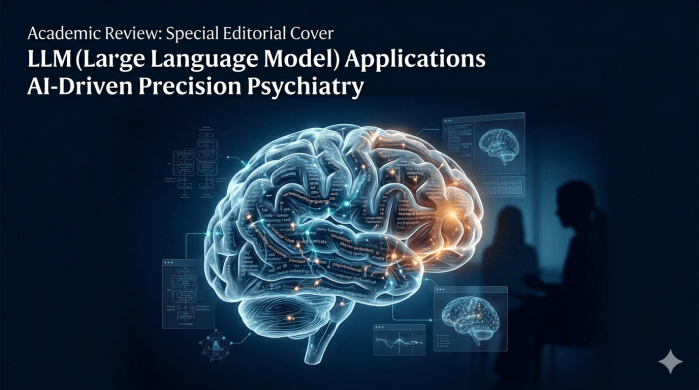
AI is entering mental health care quickly. The conversation around it moves even faster — and often outruns what the evidence actually supports. Some claims about what large language models can do for mental health are genuinely promising. Others are confident in ways the science isn’t. This piece is an attempt to hold both things at once: take the real potential seriously, and be honest about where we still are.
What Large Language Models Are — and Aren’t
Large language models (LLMs) — systems like OpenAI’s GPT series, Google’s BERT, and Meta’s LLaMA — are AI models trained on vast amounts of text data to understand and generate human-like language. They are not reasoning systems in the way humans reason. They are not diagnostic tools. They are, at their core, very sophisticated pattern-recognition systems that can produce fluent, contextually appropriate text across an enormous range of topics and tasks.
In healthcare, and specifically in mental health, interest in LLMs has grown substantially. A recent scoping review identified 95 peer-reviewed studies on LLM applications in mental health, grouping them into three broad categories: screening and detection, clinical treatment and intervention support, and counselling and education. That is a meaningful body of work. It is also, by the standards of clinical validation, still early — and it is worth being precise about what “promising” means before the word starts doing more work than the evidence allows.
Where the Evidence Is Actually Strongest
The clearest, most consistently supported use cases for LLMs in mental health fall into three distinct areas, and it matters to keep them separate — because the evidence is not equally strong across all three.
Screening and detection is where the research is most developed. LLMs have demonstrated the ability to detect linguistic patterns in text — patient narratives, clinical notes, social media language — that are associated with depression, anxiety, and suicidal ideation. Studies have shown that models can identify these signals with meaningful accuracy in controlled research settings. The qualifier is important: performance varies considerably by model, task, dataset, and population, and many studies use constrained or synthetic conditions. “Shows promise in detection” is an accurate frame. “Accurately classifies depressive symptoms” overstates what the research as a whole demonstrates, and should not be used without citing a specific study, metric, and dataset.
Psychoeducation and patient support is where LLMs fit most naturally and most safely into current care. Summarising information about conditions, explaining treatment options in accessible language, answering general mental health questions, helping patients understand what to expect from therapy — these are tasks where the risks of error are lower and the accessibility benefits are real. For people in underserved or remote areas where specialist care is genuinely scarce, a well-designed LLM-based resource can make a meaningful difference. This is the same logic behind Tele MANAS — India’s government-backed mental health access programme — that technology, built with clinical grounding and appropriate safeguards, can reach people who would otherwise receive nothing.
Clinician-facing support — summarising patient histories, flagging relevant information in electronic records, supporting documentation — is an area where recent research is cautiously encouraging. A 2026 multicenter study of psychiatric electronic health records concluded that LLMs function well as assistive tools in this context. What that same research made clear is that autonomous treatment recommendation is not what is being supported. “Summarising cases and supporting clinician review” is the accurate description of current evidence. “Recommending treatment options based on the latest research” is not — and the distinction matters enormously in a clinical context.
The Chatbot Question
AI-powered conversational tools like Woebot and Wysa are frequently cited in discussions about LLMs in mental health, and they are worth addressing precisely. Both are real, both are in active use, and both have been studied. But describing them as LLM-based tools that “utilise LLMs to provide CBT techniques” is not reliably accurate as a blanket statement.
Many versions of these tools rely on scripted conversational flows, rule-based systems, and structured CBT-style content frameworks — not on general-purpose large language models of the kind the rest of this article describes. Some components may use modern NLP or language model elements; others don’t. The more accurate framing is that these tools use “conversational interfaces grounded in CBT-style content,” and the research behind them should be evaluated on its own terms rather than imported wholesale into the broader LLM discussion.
This matters because the evidence base for structured CBT-informed digital tools is actually reasonably solid in some areas — and conflating it with the more uncertain evidence for open-ended LLM interactions muddies both conversations. The FDA’s approval of Rejoyn, the first prescription app-based treatment for depression, is a useful reference point here: that kind of regulatory validation requires a level of clinical evidence that most LLM-based mental health applications have not yet accumulated.
What Needs to Be Said About Hallucination
Every general discussion of LLMs mentions hallucination — the tendency of these models to generate confident, plausible-sounding, but factually incorrect outputs. In most domains, a hallucinated fact is an inconvenience. In mental health, it is a patient safety issue.
Recent commentary has specifically highlighted the danger of plausible-but-incorrect outputs in people who are already vulnerable — particularly in conditions involving psychosis, where a model’s confident misstatement could reinforce distorted thinking rather than gently redirect it. False reassurance in someone experiencing suicidal ideation is not a minor error. A wrong description of drug interactions in someone managing a psychiatric medication regime is not recoverable with a quick correction.
This is not an argument against LLMs in mental health. It is an argument for being honest about why human oversight is not optional in this domain — and why the framing of LLMs as “assistive tools” rather than autonomous systems is not just diplomatic hedging. It is a clinical necessity.
Consistency, Cost, and the Claims That Need Qualifying
Two frequently cited benefits of LLMs in mental health deserve more nuance than they usually receive.
Consistency — the idea that LLMs offer more standardised responses than human providers — is partially true and partially misleading. These systems are sensitive to how they are prompted, to temperature settings, to system messages, and to model updates. A change in any of these can shift outputs in ways that users cannot see or predict. “More standardised than a human clinician in some respects” is accurate. “Consistent” as an unqualified claim is not.
Cost-effectiveness is plausible — in the sense that LLM-based tools may help reduce workflow costs in some settings, particularly for documentation, triage, and psychoeducation tasks. Whether this translates to meaningful cost savings across healthcare systems, at scale, and with appropriate safety infrastructure in place, remains to be demonstrated. It should be framed as a potential benefit under investigation, not an established one.
The Bias and Regulation Problem
Bias in LLMs is real and documented — and in mental health, its consequences are not abstract. Models trained on data that underrepresents certain communities will perform differently for those communities: different accuracy in symptom detection, different relevance of psychoeducational content, different appropriateness of suggested coping strategies. The problem is not simply that biased training data “can perpetuate stereotypes” — it is that fairness varies by subgroup, by task, and by context, and the methods for measuring and mitigating that variation are still actively evolving. For a field that already struggles with health inequities, importing those inequities into AI tools without rigorous fairness evaluation would be a significant step backward.
On regulation: it is accurate that oversight of AI in mental health care has not kept pace with deployment. It is not accurate to say there is no oversight at all. Regulatory frameworks from bodies like the FDA, the EU AI Act, and CDSCO in India are developing — unevenly, with varying scope, and with significant gaps — but the picture is one of evolving and still-incomplete oversight rather than a complete absence of it. The distinction matters for the reader who is trying to understand the landscape, not just be alarmed by it.
The Bigger Picture
Overthinking and the anxiety that comes with uncertainty is one of the most common reasons people quietly struggle without seeking help. The inaccessibility of mental health care — cost, geography, stigma, waiting lists — is the reason many of them continue to struggle for years without support. If LLMs can genuinely help bridge some part of that gap, through better triage, accessible psychoeducation, and support for overwhelmed clinicians, that is worth pursuing seriously. And the barrier to seeking help in the first place is real enough that any tool which lowers it deserves careful, evidence-grounded attention.
What the field needs now is not more enthusiasm and not more dismissal, but exactly what the best clinical research is already doing: careful validation across real-world populations, honest accounting of where systems fail and for whom, interdisciplinary collaboration between clinicians and technologists, and regulatory frameworks that can keep pace with deployment without stifling development that has genuine patient benefit.
Large language models are increasingly being studied in mental health for screening, patient education, counselling support, and clinician-facing summarisation. Current evidence is promising but still early. These systems should be treated as assistive tools — with careful validation, privacy safeguards, bias monitoring, and human oversight built in from the start, not retrofitted after the fact. That is not a limitation of the technology. It is what responsible integration of any powerful tool into high-stakes clinical care has always looked like.
References
- Hua, Y., Liu, F., Yang, K., et al. (2024). Large Language Models in Mental Health Care: A Scoping Review. arXiv. https://arxiv.org/abs/2401.02984
- JMIR Mental Health. (2025). Scoping Review: LLM Studies in Mental Health (95 peer-reviewed studies). https://www.jmir.org/2025/1/e69284/
- Nature Digital Medicine. (2023). The opportunities and risks of large language models in mental health. https://www.nature.com/articles/s43856-023-00370-1
- PMC / NCBI. (2026). Multicenter study: LLMs as assistive tools in psychiatric EHRs. https://pmc.ncbi.nlm.nih.gov/articles/PMC12848494/
- PMC / NCBI. (2024). Risks, hallucination, and oversight in LLMs for mental health. https://pmc.ncbi.nlm.nih.gov/articles/PMC11444874/
- PMC / NCBI. (2025). Consistency and reliability issues in LLM clinical applications. https://pmc.ncbi.nlm.nih.gov/articles/PMC12627976/
- PMC / NCBI. (2025). Hallucination risks in LLMs for vulnerable populations. https://pmc.ncbi.nlm.nih.gov/articles/PMC12805049/
- PMC / NCBI. (2020). Woebot, Wysa and CBT-based digital tools — architecture and evidence. https://pmc.ncbi.nlm.nih.gov/articles/PMC7683843/
- ACM Digital Library. (2024). Bias and fairness in mental health AI. https://dl.acm.org/doi/fullHtml/10.1145/3650215.3650236
- Guo, Z., et al. (2024). Large Language Model for Mental Health: A Systematic Review. arXiv. https://arxiv.org/abs/2403.15401
Further Reading
On Doctor Mentis:
- Tele MANAS: India’s Mental Health App That’s Bigger Than You Think
- FDA Approves Rejoyn: The First Prescription App-Based Treatment for Depression
- Breaking the Stigma: Why It’s Okay to Seek Therapy
- Overthinking and Anxiety: How to Get Out of the Unending Loop
- The Impact of Social Media on Mental Health: What You Need to Know
External:
- Nature — A Scoping Review of LLMs for Generative Tasks in Mental Health Care
- JMIR Mental Health — Large Language Models for Mental Health Applications: Systematic Review
- The Lancet Digital Health — LLMs for the Mental Health Community: Framework and Applications
Note: This article is for informational purposes only and does not constitute medical advice. For personalised mental health support, please consult a qualified healthcare professional.
Written by DOCTOR MENTIS — Where Mind and Body Meets.
Discover more from Doctor Mentis
Subscribe to get the latest posts sent to your email.


0 comments on “Large Language Models in Mental Health: What the Research Actually Says — and What It Doesn’t”