

There’s a particular kind of vertigo that comes from an old song playing unexpectedly — not just the memory it drags up, but the feeling that arrives with it, uninvited. New research out of Georgia Tech suggests that vertigo isn’t incidental. Music doesn’t just retrieve memories; under the right conditions, it can quietly reshape how those memories feel when we bring them back.
What the Georgia Tech Study Actually Found
In late 2024, psychology researcher Yiren Ren and colleagues at Georgia Tech, working with music-cognition researchers at the University of Colorado Boulder, published a study built around a simple question: if you listen to emotionally charged music while recalling a memory, does the memory itself change? Forty-four participants recalled personal memories while movie soundtracks played in the background, and the effect wasn’t subtle — the results suggest music acts as an emotional lure, becoming intertwined with memories and subtly altering their emotional tone. The shift wasn’t fleeting either: a day later, recalling the same memories without any music, participants’ emotional tone still matched the mood of the music played the day before.
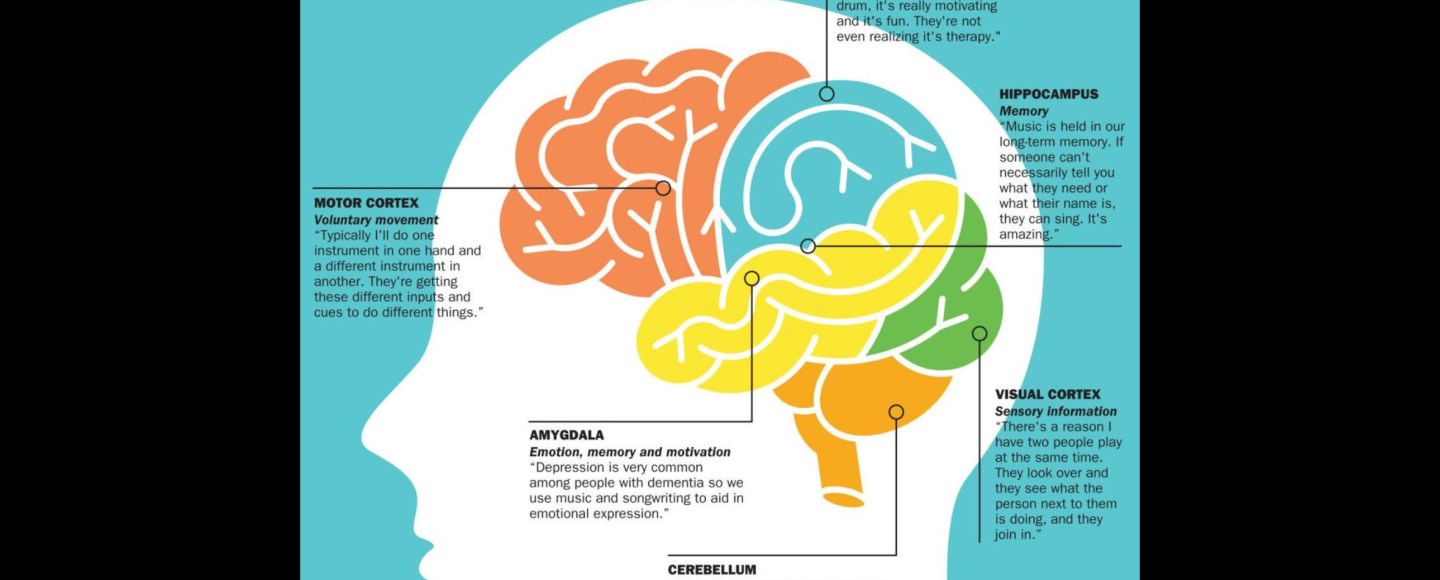
fMRI scans gave a plausible mechanism. The researchers saw increased connectivity between the amygdala, where emotions are processed, and other brain regions tied to memory and integration. It’s worth being precise about what this does and doesn’t show: this is one well-designed study demonstrating that music can shift the emotional coloring of a memory under controlled recall conditions, not proof that every song permanently rewrites every memory it touches in daily life. The researchers themselves are cautious on this point, noting that while further research is needed, the findings carry exciting implications for both everyday life and medicine.
It’s a similar kind of malleability we touched on when looking at how people judge missed deadlines more harshly than the facts warrant — perception, whether of a colleague’s lateness or your own past, is reconstructed each time, not replayed from an unedited tape.
Why Music-Evoked Memories Hit Differently
This ties into a well-documented phenomenon called Music-Evoked Autobiographical Memories, or MEAMs — the experience of a song pulling up a vivid, specific, often involuntary memory. Comparative studies back up what most people already sense intuitively: MEAMs show significantly greater reliving, personal significance, and social content than memories triggered by television, and they carry more positive and intense emotions. Compared to memories cued by photographs of faces, music-evoked memories also come with more perceptual detail, suggesting they are both richer and more vivid.
One theory for why: music’s emotionally evocative quality may itself be the mechanism, since strong emotion tends to produce more vivid memory retrieval. Familiarity plays a role too — the more personally loaded a piece of music, the more reliably it can serve as a doorway back into a specific moment.
Where This Could Help — and Where the Evidence Is Still Thin
The therapeutic possibilities are genuinely interesting, though it’s worth resisting the urge to oversell them.
For PTSD, a 2024 systematic review and meta-analysis of randomized controlled trials found that post-treatment PTSD symptom scores were significantly lower in music therapy groups than inactive controls — though the same review rated the overall certainty of that evidence as low, and a separate 2024 review noted most included studies were small feasibility trials rather than rigorous head-to-head comparisons with established treatments. That’s not a reason to dismiss music therapy; it’s a reason to describe it as promising rather than proven. This mirrors the caution we’ve applied when writing about how childhood trauma reshapes the developing mind — the mechanisms are becoming clearer even as the treatment evidence catches up.
For depression, the logic of pairing positive music with the recall of difficult memories is plausible and consistent with the Georgia Tech findings, but it hasn’t yet been tested as a standalone depression intervention in the way that, say, app-based treatments have — see our coverage of the FDA’s approval of Rejoyn, the first prescription app-based depression treatment, for how differently that evidence bar gets cleared. It’s also worth reading alongside our piece on why teens are struggling with self-esteem, since emotional regulation tools like these are frequently discussed in adolescent contexts even though most of the underlying research is done on adults.
Dementia and Alzheimer’s care is where the picture is most mixed, and most misunderstood. Music is often described as something close to magic for people with dementia, and there’s a real basis for that — meta-analyses show music interventions can improve cognitive function and quality of life in people living with dementia. But other systematic reviews land differently: one large review found music therapy reduced behavioral symptoms but found little evidence of benefit for cognition or overall quality of life. The honest summary is that music-based interventions are a reasonable, low-risk complement to dementia care with real emotional and behavioral benefits, not a cognitive cure. Products like the Music Memory Box — a personalized, tactile device that pairs objects and photographs with meaningful songs — are best understood as reminiscence tools built on that emotional connection, not medical devices with proven cognitive outcomes. It’s the same nuance we tried to hold onto when writing about Tele MANAS and mental health access in India — access and comfort matter enormously, even when a tool isn’t a cure.
Music as a Learning Aid
The educational angle deserves the same hedge. Music can support learning and memory in specific contexts — rhythm and melody make information easier to chunk and retrieve, which is why mnemonic devices set to tunes tend to stick. But “music aids learning” is a may-help-depending-on-the-task-and-the-learner finding, not a blanket claim that background music improves retention across the board. This connects naturally to the groundwork we laid in fostering emotional intelligence in children — music-based learning tools tend to work best when they’re paired with emotional engagement, not used as a substitute for it.
Putting This Into Practice
A few grounded takeaways, without overstating what the science supports:
- Personal use: revisiting a memory while listening to music that carries real emotional weight for you can be a legitimate way to reflect on and reframe how that memory feels — not because it erases the original event, but because recall itself is flexible.
- Clinical settings: music can be a useful adjunct in therapy for reframing distressing memories, best used alongside — not instead of — established treatments.
- Educational settings: music works best as one tool among several for memory retention, particularly when tied to content that already carries some emotional or personal relevance.
None of this makes memory unreliable in some worrying sense — it makes it more human. A memory that can absorb the mood of a song is a memory still being actively built, years after the event it describes, by a mind that keeps reaching back to make sense of what happened. That reconstructive quality is arguably what makes music such an effective, low-cost complement to therapy and learning alike: it doesn’t fight the way memory naturally works, it works with it.
Note: This article is intended for informational purposes and does not constitute medical or psychological advice. For professional support, please consult a qualified healthcare provider.
References
- Georgia Tech: “Music Can Change How You Feel About the Past”
- Neuroscience News: “Music Can Change the Emotional Tone of Your Memories”
- Music Perception (UC Press): “Phenomenological Differences in Music- and Television-Evoked Autobiographical Memories”
- PMC: “Investigating the Role of Involuntary Retrieval in Music-Evoked Autobiographical Memories”
- European Journal of Psychotraumatology: “Efficacy and Acceptability of Music Therapy for PTSD”
- PubMed: “Music Therapy in the Treatment of Dementia — A Systematic Review and Meta-Analysis”
- PMC: “Music Intervention Approaches for Alzheimer’s Disease — A Review of the Literature”
- Music Memory Box — official site
Further Reading
On Doctor Mentis:
- Missed Deadlines Lead to Harsher Judgments: Understanding the Psychological Impact
- The Relationship Between Childhood Trauma and Mental Health Disorders
- FDA Approves Rejoyn: The First Prescription App-Based Treatment for Depression
- Why Teens Are Struggling With Self-Esteem: Insights and Interventions
- Tele MANAS: India’s Mental Health App That’s Bigger Than You Think
- Fostering Emotional Intelligence: Teaching Children to Understand and Manage Their Emotions
External:
- PMC — “Music Interventions for Posttraumatic Stress Disorder: A Systematic Review”
- PLOS One — “Qualities of Music-Evoked Autobiographical Memories and Auditory Features”
- Wikipedia — “Music-Evoked Autobiographical Memory”
Discover more from Doctor Mentis
Subscribe to get the latest posts sent to your email.


0 comments on “Music Alters Emotional Recall of Memories: Unveiling the Power of Sound on Our Past”